PAHT-CF — carbon fibre nylon
High-temperature nylon reinforced with chopped carbon fibre. Our speciality: the material the CarboXtrem armrests are made of.
Properties
- Very stiff
- Takes heat (~150 °C)
- Light
- Stable for years
- Matt black
Good for
Loaded brackets, bike and motorbike parts, machine spares, workshop tooling. When the part really has to work, start here.
PAHT-GF · PA6 — glass fibre nylon
Nylon reinforced with glass fibre: nearly as strong as the carbon grade, with a little more give before it breaks.
Properties
- Impact resistant
- Takes heat
- Tough
- Cheaper than CF
Good for
Mechanical parts that take knocks and vibration: anchor points, hard housings, fixing parts.
PETG
The general-purpose technical plastic: forgiving, predictable and weatherproof.
Properties
- Lives outdoors
- Does not go brittle
- Good price
- Colours
Good for
Housings, guards, jigs, light-duty brackets and prototypes that are actually used.
TPU — flexible
Printable rubber. It does not break: it bends, grips and cushions.
Properties
- Flexible
- Absorbs impact
- Grippy
- Will not mark what it touches
Good for
Stops, sleeves, gaskets, guards and grips. Also as a soft liner between a hard part and whatever it holds.
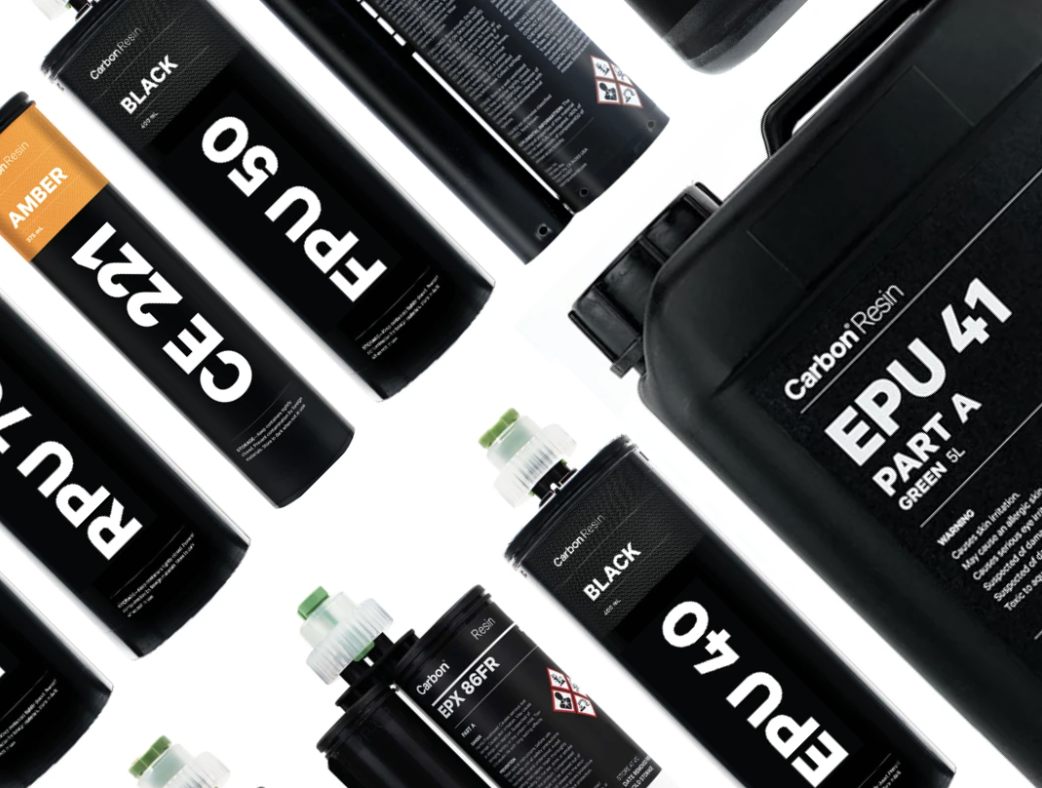
Carbon resins — DLS
The Carbon resin range (EPU, FPU, RPU, EPX): technical rubbers and fine rigid parts printed with light, at production quality.
Properties
- Impossible lattices
- From rubber to rigid
- Smooth surface
- Repeatable in series
Good for
Custom pads and cushioning — like the lattices in our elbow rests — grips, and fine parts in short runs.
PA12 — SLS
Nylon powder sintered with a laser, no supports needed: the part comes out whole from the powder bed.
Properties
- Accurate
- No layer marks
- Mechanisms come out assembled
- Ideal for batches
Good for
Hinges, mechanisms, thin housings and runs of small parts with a good finish.
Metals — DMLS
Metal 3D printing, layer by layer with a laser: Ti6Al4V titanium, AlSi10Mg aluminium, pure copper, Inconel 718 and stainless steels.
Properties
- Titanium: light and immensely strong
- Aluminium: sheds heat
- Copper: conducts
- Inconel: extreme heat
- Stainless: hard and noble
Good for
Where plastic will not do: critical anchor points, parts with internal channels, nozzles, heat exchangers, tooling. Shapes a milling machine cannot cut, from one unit to short runs.
Carbon fibre plate
Real laminated carbon fibre, 1 to 4 mm, CNC-cut to the exact shape.
Properties
- Maximum stiffness per gram
- Will not warp
- Real weave on show
Good for
Plates, reinforcements, levers and flat parts where every gram counts.
How we laminate carbon fibre